
Mint Sandstone: Properties, Applications and How to Choose It

Mint sandstone is one of those stones people notice before they can say why. The soft White tones, with flashes of beige and warm earthy streaks, make it look calm and natural rather than manufactured. It is a quarried Indian sandstone, valued for a fine, even grain, good strength for its type, and a colour palette that suits both modern and traditional settings. You will find it in patios, garden paths, courtyards, wall cladding and building facades across residential and commercial projects. This guide covers what the stone is, how it behaves, which finish suits which job, and how to choose a good batch before you place an order.
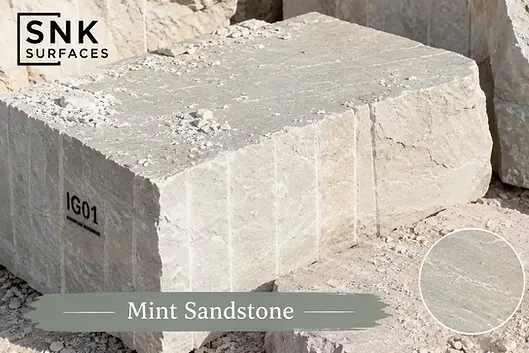
What Is Mint Sandstone?
Mint sandstone is a sedimentary rock. It formed over millions of years as sand grains, mostly quartz with some feldspar and mineral particles, settled in ancient riverbeds and shallow basins. Layer upon layer built up, and pressure and natural mineral cements bound the grains into solid stone. Much of the commercially available material is quarried in Gwalior region of Madhya Pradesh, India, where large sandstone deposits are cut into slabs, tiles and cobbles.
The colour comes from the minerals present while the stone formed. Traces of iron compounds and other minerals produce the pale mint White tones, while the surrounding sediment adds pale grey, beige, cream and sometimes light rust or brown markings. No two slabs look identical. Some are fairly uniform, and others have bold banding, fossil-like patterns or cloudy patches. That variation is the stone's main appeal.
Key Characteristics of Mint Sandstone
Texture and colour variation. The grain is typically fine to medium, and the surface has a slightly granular, natural feel. Expect shade differences between slabs, and even within a single slab. Veining, banding and small natural markings are normal and are not defects.
Strength. Good quality Indian sandstone generally performs well in compression, which is why it is trusted for paving and cladding. Exact figures vary by quarry and batch, so ask the supplier for a test report rather than relying on general numbers.
Porosity and water absorption. Sandstone is naturally porous. Water absorption usually falls in a low to moderate range, and denser material absorbs less. Lower absorption generally means better frost resistance and easier upkeep.
Weather resistance. In most climates mint sandstone handles rain, sun and temperature swings well. In freeze-thaw regions such as the UK, Ireland and parts of Europe, check frost resistance data for the batch you are buying. UV exposure rarely causes serious trouble, though some colour softening over many years is natural. In coastal areas, salt exposure and constant dampness call for a sealer and regular cleaning.
Common Uses of Mint Sandstone
Outdoor paving is the most common use. Patios, terraces, driveways with a suitable sub-base, and large garden areas all suit it, and the cool colours blend well with planting. Garden pathways and stepping areas work well with cobbles or smaller format pieces, which also fit curves better than large slabs.
Courtyards and entrance areas benefit from the stone's refined look, especially in boutique hotels, restaurants and residential developments. On walls, mint sandstone works as cladding, feature walls, boundary walls and retaining wall facing. Split face and riven finishes add depth and shadow, which gives a facade more character in changing daylight.
It also turns up around pools, in steps and copings, and in commercial landscaping where designers want a natural stone look at a sensible cost.
Different Finishes and Their Applications
The finish changes how the stone looks, feels and performs, so it deserves as much thought as the colour.
Natural riven. This is the classic hand-split surface, slightly uneven with a lively texture. It offers the best slip resistance of the common finishes and hides footprints and light marks well. It suits patios, paths and pool surrounds. It takes a little more time to sweep and clean because dirt settles in the texture.
Sawn and honed. A sawn face is flat and uniform, and honing smooths it further. The look is clean and contemporary, and installation is easier because thickness is consistent. These finishes can be more slippery when wet, so they suit covered or lower-risk areas, interiors and modern terraces more than steep or shaded paths.
Tumbled. Edges and surfaces are softened in a tumbling process for an aged, worn appearance. It works well for traditional gardens, cottage-style projects and cobbles.
Bush hammered or textured. A pitted, mechanically textured surface gives strong grip and a rustic character. It is a sound option for steps, ramps and wet areas.
Split face. Mostly used on walls, it creates a rugged, dimensional look that catches light and shadow.
As a rule of thumb, the more texture a finish has, the better the grip and the more cleaning it needs. Smoother finishes look sharper but ask for more care around water.
Advantages and Limitations
What it does well. The natural beauty is hard to match, and the colour range pairs well with timber, planting, brick and render. It is versatile enough for floors, walls and landscaping. With proper installation it lasts for decades, and individual slabs can be replaced if one is ever damaged. It also ages gracefully rather than looking tired.
Where you need to be careful. Because it is porous, it can stain from oil, rust, leaf tannins, red wine and similar substances if it is not sealed. Moss and algae can grow in damp, shaded spots, so occasional cleaning is part of owning it. Shade variation can surprise clients who expected a perfectly uniform look, so setting expectations early avoids disputes. Installation matters too. Poor drainage, a weak base or the wrong adhesive leads to cracking, lifting or efflorescence. And in very harsh freeze-thaw or heavily salted environments, a lower-absorption, tested grade is the safer choice.
How to Select the Right Mint Sandstone
Ask for physical samples. Screens and catalogue photos rarely show the true colour range. Look at samples outdoors, in the light your project will actually get, and wet them to see how the colour changes.
Request technical test reports. Ask for water absorption, compressive strength, flexural strength, slip resistance and frost resistance results. Reputable suppliers can provide these, and they matter most for commercial work and cold climates.
Check thickness and calibration. Paving for pedestrian use is commonly 20 to 25 mm on a solid bed, while vehicle areas and loose-laid applications need more. Calibrated slabs with consistent thickness make installation faster and neater.
Match the finish to the job. Choose a textured finish for wet or sloped areas and a smoother one where appearance leads and traffic is light.
Review colour consistency. Ask to see several slabs from the production batch, not just the best ones. For larger projects, confirm that the supplier can deliver the same batch in full, so you do not end up with visible shade jumps between phases.
Plan the budget realistically. Include delivery, wastage (usually 5 to 10 percent), sealer, adhesive and sub-base materials, not just the price per square metre. A cheaper slab with high wastage or poor calibration can cost more in the end.
Think about installation. Confirm the substrate, drainage, jointing method and who will lay it. Experienced installers familiar with natural stone make a visible difference.
Conclusion
Mint sandstone offers a rare mix of soft colour, natural character and practical performance. It works hard in paving, walling and landscape design, as long as you pick the right finish, check the technical data and allow for normal variation. Start with the setting and how it will be used, then test samples, compare reports, and be honest about the budget and the upkeep you are prepared to do. Get those pieces right and the stone will look good for many years.
If you are sourcing for a project, you can explore the range at SNK Surfaces and request samples and technical documents before you commit.
FAQs
1. What is mint sandstone?
Mint sandstone is a natural sedimentary stone made of compacted quartz grains and minerals. It is known for its soft mint White, pale grey, beige and earthy tones, and it is widely used for paving, cladding and landscaping.
2. Where does mint sandstone come from?
Most commercial mint sandstone is quarried in Gwalior region of Madhya Pradesh, India, where large deposits are cut into slabs, tiles, cobbles and wall cladding for export.
3. Is mint sandstone suitable for outdoor use?
Yes. It performs well in patios, paths, courtyards and garden areas. In freeze-thaw climates, check frost resistance data and water absorption results for the specific batch.
4. Is mint sandstone slippery when wet?
It depends on the finish. Natural riven and bush hammered surfaces offer good grip, while sawn and honed finishes can be slippery when wet. Ask for slip resistance test results for areas near water or on slopes.
5. Does mint sandstone need sealing?
Sealing is recommended in most outdoor settings. Sandstone is porous, so a good penetrating sealer helps resist stains, moss and moisture. Reapply it as the manufacturer advises.
6. How much does mint sandstone vary in colour?
Quite a lot. Shade, banding and markings differ between slabs and sometimes within one slab. This is normal and part of its character, so review several slabs from the same batch before ordering.
7. What thickness should I choose for paving?
Pedestrian paving is commonly 20 to 25 mm on a solid mortar bed. Thicker slabs are better for vehicle areas or loose-laid applications. Your installer or engineer should confirm the right spec.
8. Can mint sandstone be used for wall cladding and facades?
Yes. Split face, sawn and riven finishes all work for cladding and feature walls. Use the right fixing system and adhesive, and make sure the thickness suits the application.
9. How do I maintain mint sandstone?
Sweep regularly, wash with water and a soft brush, and use a pH-neutral stone cleaner. Avoid harsh acids, which can damage the surface. Clean shaded areas more often to prevent moss and algae.
10. What should I ask a supplier before buying mint sandstone?
Ask for physical samples, technical test reports (water absorption, strength, slip and frost resistance), available finishes and thicknesses, batch consistency, wastage allowance and delivery timelines.


Comments